
A PR director at a Fortune 500 company recently told me that her team caught a negative story about their CEO 47 minutes before it was published in mainstream media. They prepared talking points, briefed the communications team, and had a statement ready when reporters started calling. The crisis that could have dominated a news cycle became a one-day story with minimal brand impact.
The CFO’s question at the next budget meeting: “What’s the ROI on that monitoring software?”
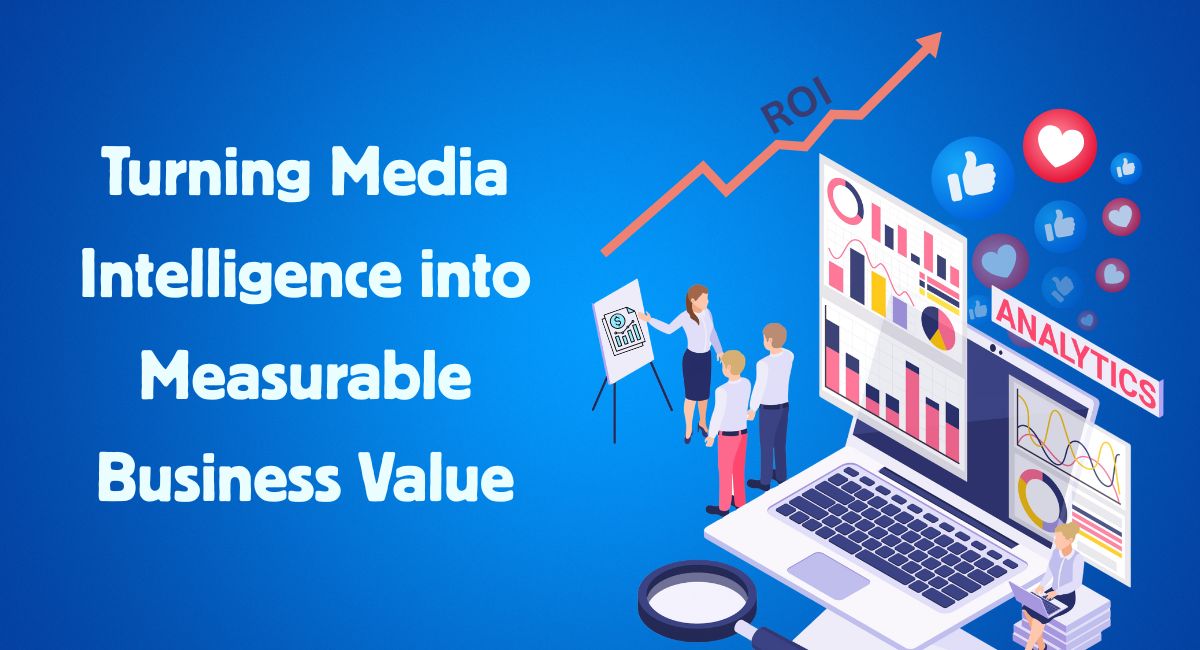
It’s a fair question with an unsatisfying answer if you’re counting clips. Media monitoring ROI requires a different measurement framework than most marketing spend. The value is evident in coverage you caught that you would have otherwise missed, response times that prevented escalation, and intelligence that informed decisions before problems became crises. The challenge isn’t whether monitoring delivers value; it’s whether it provides value. It’s proving that value in terms that finance teams understand.
Why Traditional ROI Calculations Fail for Media Monitoring
Media monitoring ROI is challenging to calculate because the most valuable outcomes are preventive. You can’t easily quantify the crisis that didn’t happen because you caught warning signs early. According to the AMEC Barcelona Principles 4.0, measuring communication value requires moving beyond outputs, such as clip counts, to focus on outcomes that impact business performance.
Most PR teams default to volume metrics because they’re easy to track. Articles monitored, mentions captured, reports generated. These numbers satisfy procurement but tell leadership nothing about value delivered. A team that produces 500 clips per month isn’t necessarily more valuable than one producing 50 with actionable intelligence on each.
The measurement problem gets worse when teams use automation-only tools. Human analysts achieve an accuracy rate of 80-85% in sentiment classification, while automated tools typically hover around 50-60%. If half of your “positive” coverage is actually neutral or negative, your ROI calculations are based on flawed data.
Start by separating your metrics into outputs (what you produce) and outcomes (what changes as a result). Audit your current reporting to see which category dominates. If you’re mainly reporting outputs, you’re not positioned to demonstrate ROI.
Three Questions That Define Media Monitoring ROI
Media monitoring ROI answers three questions: Did you catch coverage you would have missed? Did you respond faster than you would have otherwise? Did the intelligence improve decisions that affected business outcomes?
Coverage You Would Have Missed
Track every piece of coverage that your monitoring surfaces would have missed with manual scanning. This includes regional outlets, trade publications, broadcast mentions, podcast discussions, and social media conversations. For a typical enterprise PR team, AI-powered media monitoring covering 300,000+ sources captures 3-5x more relevant coverage than manual Google Alerts and RSS feeds.
Document specific instances weekly. That podcast mention from an industry influencer discussing your product category. The trade publication analysis is behind a paywall that your competitors likely read. The local TV segment that aired at 6 AM in a market where you have operations. The LinkedIn post from a former employee is gaining traction. Each represents coverage that affects your brand perception but would have gone unnoticed without systematic monitoring.
The coverage gap compounds over time. Miss one regional story, and you might also miss the follow-up coverage when larger outlets pick it up. Miss a trade publication analysis, and you’ve lost the opportunity to respond while the story is still developing. Quantify this by running a parallel audit: for two weeks, track what your monitoring catches against what manual scanning finds. The difference represents your coverage ROI baseline.
Response Time Improvements
Measure the gap between when coverage appears and when your team becomes aware of it. Before implementing monitoring, most teams discover negative coverage hours or days after publication has occurred. After implementation, that window should shrink to a matter of minutes. This compression represents quantifiable ROI.
The 2017 United Airlines passenger incident generated 47,000 mentions in the first 12 hours. PR teams had roughly 90 minutes before the narrative hardened. Response time determines whether you shape the story or spend weeks recovering from someone else’s version of events.
Create a response time log. For every significant coverage item, note the date it was published, the date your monitoring flagged it, and the date your team took action. Calculate average detection time and track improvements over quarters. If your monitoring reduces average detection from 4 hours to 30 minutes, that’s a 7.5x improvement you can present to leadership in concrete terms.
Factor in after-hours coverage. Stories don’t break on a 9-to-5 schedule. If your team lacks continuous monitoring coverage, calculate the risk exposure during nights and weekends. A story that breaks at 10 PM and isn’t seen until 8 AM the next morning has ten hours to develop without your input.
Decision Quality
The hardest ROI element to quantify, but often the most valuable. Track decisions that have changed due to media intelligence. A campaign pivot based on competitor coverage analysis. An executive communication was revised after sentiment data revealed message pull-through issues. A product launch timeline was modified due to the discovery of a brewing industry controversy.
Create a decision log. Each week, document one decision where media intelligence contributed to the outcome. After 90 days, you’ll have concrete examples of strategic value, not just operational efficiency.
Building a Media Monitoring ROI Framework
A practical ROI framework connects monitoring activities to business outcomes through three measurement layers: operational efficiency, risk mitigation, and strategic value.
Operational Efficiency
Calculate time savings from automated monitoring versus manual processes. A typical PR professional spends 3.5 hours daily on media scanning when doing it manually. Analyst-curated executive briefings reduce that to 15-20 minutes of review time. At loaded labor costs of $75-100 per hour, the math becomes straightforward.
Factor in consolidation savings if your monitoring replaces multiple point solutions. Many enterprise teams run separate tools for broadcast, print, social, and online coverage. A unified platform eliminates redundant subscriptions and reduces training overhead.
Risk Mitigation
Crisis costs vary by industry, but research consistently shows that early detection significantly reduces financial impact. A crisis caught in the first hour costs a fraction of one that escalates for 24 hours before response. Assign a conservative estimate to the crisis avoidance value based on your industry benchmarks and your company’s historical experience.
Track near-misses systematically. Every emerging issue your team catches early represents a potential crisis cost avoided. A supplier quality issue was reported in a regional paper before it gained national media attention. A social media complaint from an influencer that could have gone viral. An executive quote taken out of context that you corrected before syndication spread. Even if you can’t prove that the crisis would have occurred without intervention, the pattern demonstrates the value of monitoring over time.
Quantify reputation value as part of your risk calculation. For publicly traded companies, negative coverage often correlates with fluctuations in stock prices. For private companies, reputation significantly impacts customer acquisition costs, employee retention, and partnership opportunities. While precise attribution is challenging, reasonable estimates based on industry research strengthen your risk mitigation case, making it more compelling than ignoring this value entirely.
Strategic Value
Connect media intelligence to campaign performance improvements. When strategic media analysis reveals that competitor messaging is gaining share of voice in your key topic areas, and your team adjusts strategy in response, that’s measurable strategic value.
Document competitive intelligence applications. Monitoring your competitors’ coverage patterns often reveals opportunities and threats before they become apparent. A competitor’s quiet regulatory filing was mentioned in a trade publication. An executive departure buried in a regional business journal. This intelligence has concrete strategic value.
Map your current metrics to these three layers. Most teams over-index on operational efficiency (easy to measure) and under-invest in documenting risk mitigation and strategic value (more complex but more compelling to leadership).
Presenting Media Monitoring ROI to Leadership
CFOs think in different terms than PR directors. Translate monitoring value into language that finance teams understand, focusing on cost avoidance, risk reduction, and return on investment.
Lead with the largest number if crisis avoidance represents your most significant value, open with that. If time savings are the primary concern, quantify the labor cost reduction. Don’t bury the strongest argument in a list of secondary benefits.
Use specific examples rather than aggregate statistics. “Our monitoring caught the regulatory filing that led to our preemptive stakeholder communication” resonates more than “we tracked 10,000 mentions last quarter.” Stories illustrate value in ways that numbers alone cannot.
Acknowledge uncertainty honestly. Some ROI elements are inherently speculative. A crisis that cannot be prevented can’t be proven with certainty. Present ranges rather than false precision, and let the cumulative evidence make the case.
Prepare a one-page executive summary with three sections: investment (what monitoring costs), return (quantified value delivered), and proof points (2-3 specific examples). Keep backup data available, but don’t lead with spreadsheets.
Common Mistakes in Media Monitoring ROI Calculations
The most frequent error is measuring outputs instead of outcomes. Clip counts, report volumes, and alert frequencies tell leadership nothing about business impact. A team that produces fewer reports with higher-quality intelligence delivers more value than one that generates noise.
Second, teams often ignore cost comparison baselines. If you don’t document the cost of monitoring through manual processes or multiple point solutions, you can’t demonstrate savings from consolidated, automated approaches.
Third, PR directors sometimes undervalue their own time. The hours you spend compiling briefings, scanning publications, and verifying sentiment are real costs that automated monitoring with human verification eliminates. Track your time honestly.
Fourth, teams fail to document the counterfactual. When monitoring catches an issue early, note what would have happened without that early warning. The alternative scenario makes the value concrete.
Audit your current ROI approach against these four errors. If you’re making any of them, your ROI case is weaker than it could be.
Making ROI Measurement Sustainable
ROI calculation shouldn’t require more work than the monitoring itself. If proving value requires hours of manual compilation, the measurement system is unsustainable.
Build ROI tracking into your monitoring workflow. Tag coverage by source type to demonstrate reach beyond manual capabilities. Note response times in your crisis logs. Document decisions in real-time rather than reconstructing them quarterly.
Your monitoring platform should support measurement, not complicate it. Built-in analytics that connect coverage patterns to business events, sentiment tracking that shows trends over time, and client success stories that provide benchmarks all make ROI demonstration easier.
The goal is continuous proof of value, not annual justification exercises. When ROI tracking becomes routine, budget conversations become straightforward.
Media monitoring ROI isn’t about counting clips. It’s about proving that your investment in media intelligence delivers business outcomes: coverage you wouldn’t have caught, response times that prevented escalation, and decisions that shaped results. Frame your measurement around those outcomes, and the value becomes visible to everyone who matters.

Ted Skinner
Ted Skinner is VP of Marketing at Fullintel, where he leads content strategy for a media intelligence company serving PR teams across enterprise, agency, and government sectors. His current work focuses on how AI is reshaping media monitoring workflows and digital visibility strategy—including the transition from traditional SEO to answer engine optimization.
Read more of Ted’s insights on AI-powered PR strategies and follow his latest thinking on modern measurement approaches.