
What were the top pharma news stories as of April 2026?
Recent coverage highlights three emerging narratives shaping healthcare discourse, including supply chain vulnerability, drug pricing transparency, and therapeutic innovation. From geopolitical risks impacting generic drug availability to scrutiny of pricing platforms and new clinical insights expanding treatment pathways, the stories reflect evolving pressures and opportunities across the healthcare ecosystem.
April 2026 Pharma News Breakdown
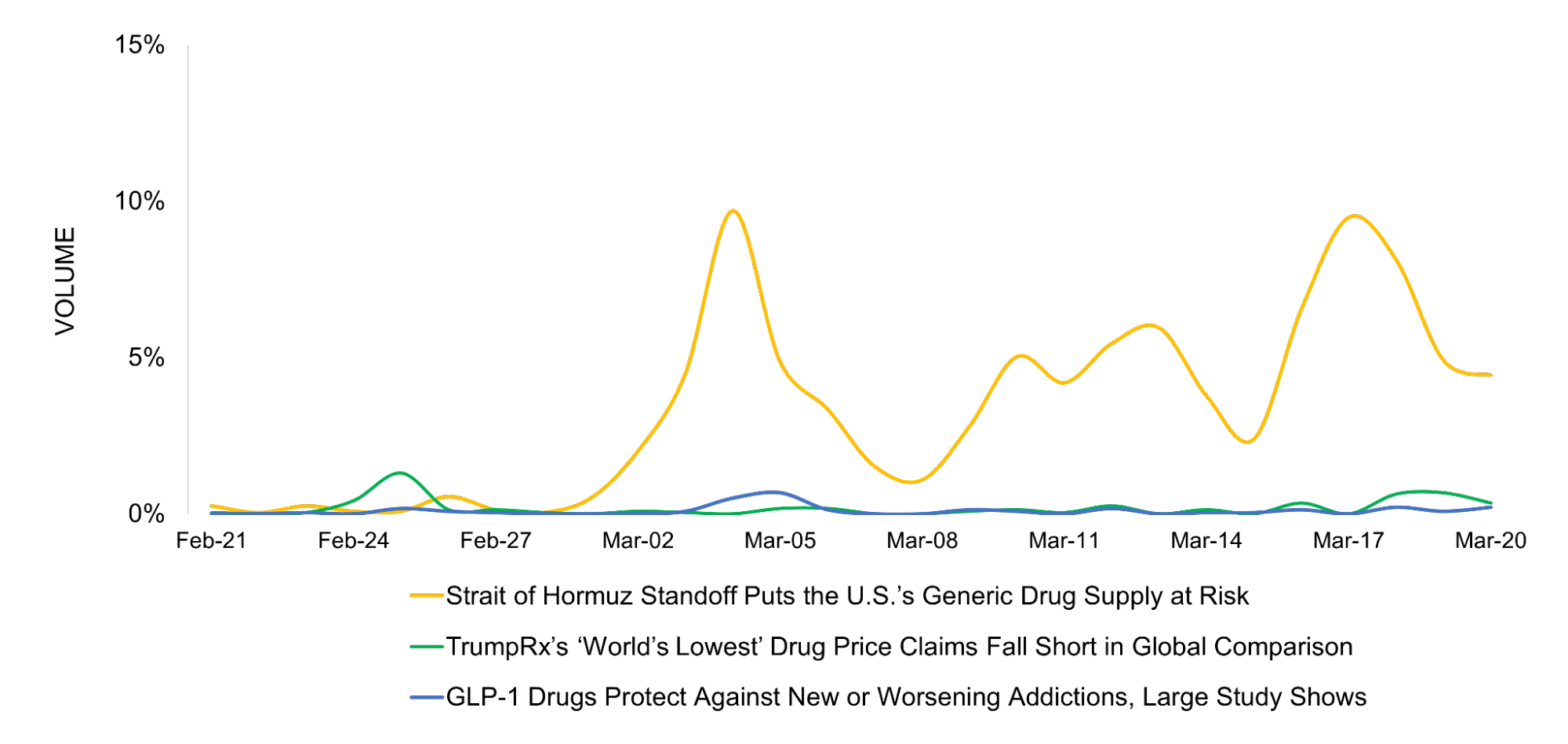
Strait of Hormuz Standoff Puts the U.S.’s Generic Drug Supply at Risk
What is happening in the Strait of Hormuz?
A geopolitical escalation has disrupted the Strait of Hormuz, a critical global shipping route, creating risks for the pharmaceutical supply chain linking India and the United States. India produces nearly half of the U.S.’s generic drugs but depends on the Strait for key inputs, creating a “petroleum-to-pill” bottleneck with potential downstream impacts on drug availability and pricing. The crisis intensifies with a 400% surge in air freight costs and cyberattacks on firms such as Stryker, creating parallel pressures on supply availability and healthcare operations.
The disruption impact:
- Poses risk of nationwide shortages of antibiotics, diabetes, and cardiovascular drugs within 4 to 6 weeks as inventories decline
- Drives a shift to air freight, increasing logistics costs by approximately 400%, with implications for cold-chain therapies such as biologics
- Disrupts supply continuity due to reliance on other countries for generic drug manufacturing
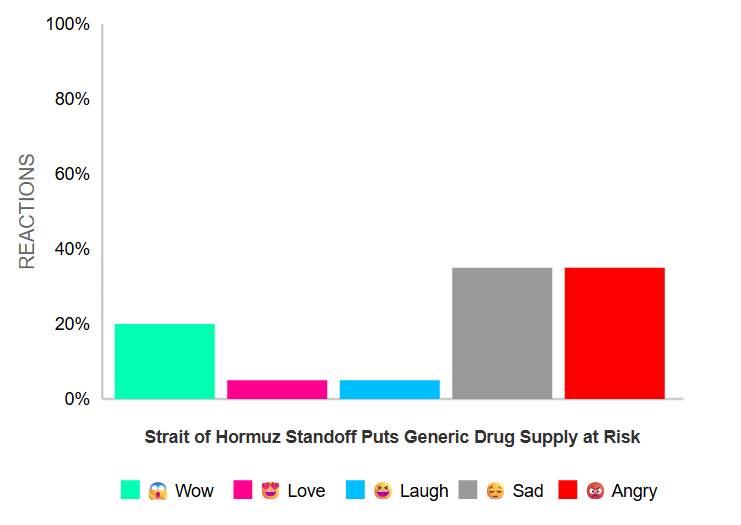
Social reactions to the Strait of Hormuz disruption skew negative, with elevated “angry” and “sad” responses reflecting concern over potential drug shortages and healthcare access. Conversations focus on the U.S. reliance on Indian generics and rising costs, while limited “wow” reactions suggest attention to the scale of the disruption rather than optimism about mitigation efforts.
TrumpRx’s ‘World’s Lowest’ Drug Price Claims Fall Short in Global Comparison
Is TrumpRx truly delivering the “World’s Lowest” drug prices?
Recent coverage reassesses the TrumpRx.gov platform following investigative reports questioning its “world’s lowest” drug-price claims. While the initiative uses a Most-Favored-Nation (MFN) pricing model to align U.S. prices with international benchmarks, investigative audits by The New York Times suggest the platform often does not match lower government-negotiated prices in Europe and Asia, shifting the narrative from innovation to scrutiny.
Why are the claims considered false or misleading?
- Investigative reports found that many TrumpRx drugs remain significantly more expensive than in Germany or the U.K.
- Congressional analysis revealed the platform lists discounted brand-name drugs while omitting much cheaper, existing generic versions of the same medications.
- Many “new” prices, such as the $149 price for the Wegovy pill, were already available via manufacturer coupons or existing apps like GoodRx.
- The platform launched with only 54 medications, excluding thousands of critical treatments for cancer, heart disease, and other chronic conditions.
- As TrumpRx is a cash-only system, purchases do not count toward insurance deductibles, potentially increasing insured patients’ total out-of-pocket costs.
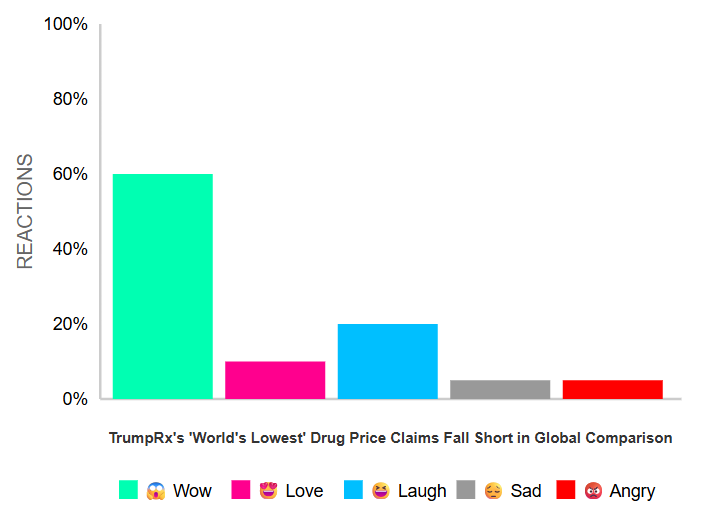
Audience reactions skew toward surprise, with “wow” responses dominating as audiences react to the gap between TrumpRx’s claims and global pricing comparisons. Moderate “laugh” and “love” engagement suggests some users view the claims skeptically or with irony, while lower “angry” and “sad” responses indicate concern is present but less dominant than disbelief and scrutiny.
GLP-1 Drugs Protect Against New or Worsening Addictions, Large Study Shows
The “Anti-Addiction” Breakthrough: GLP-1 Drugs Expand Beyond Weight Loss
Emerging clinical and observational data suggest GLP-1 receptor agonists, including Ozempic, Wegovy, and Mounjaro, may help address substance use disorders by reducing reward-driven cravings. Originally designed for type 2 diabetes and obesity, these medications are increasingly being recognized for their “off-target” benefit: dampening the brain’s reward circuitry. From reducing alcohol cravings to preventing opioid relapses, this breakthrough is being hailed as a potential game-changer for public health and the global addiction crisis.
The Data Behind the Breakthrough
- A study of over 1.3 million patients links GLP-1 use to 40% lower risk of opioid overdose and 50% reduction in alcohol use disorder.
- Mechanism targets dopamine pathways, reducing cravings for alcohol, nicotine, and other substances.
- Early signals indicate an impact on smoking and behavioral addictions such as gambling.
- Additional benefits include lower cardiovascular risk when combined with lifestyle changes.
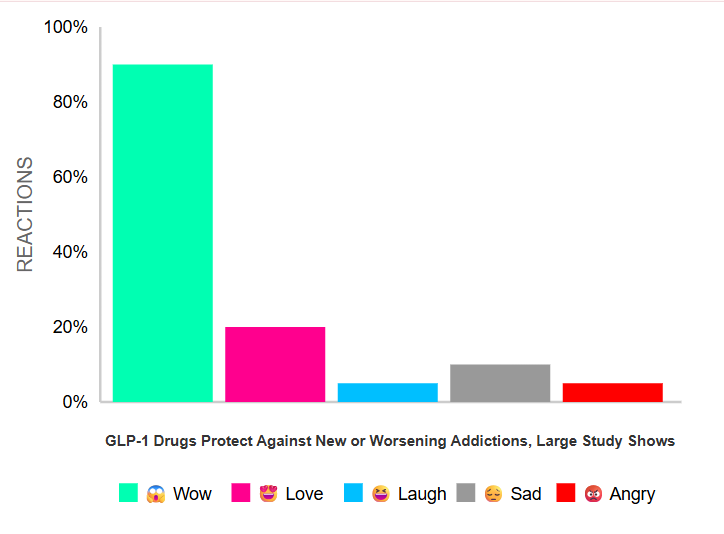
Coverage reflects cautious optimism, positioning GLP-1s as a potential new approach in psychiatric care. Social media amplifies patient testimonials citing reduced cravings, while experts emphasize the need for large-scale clinical trials before broader adoption.
The Pulse: AI in Healthcare
1. Roche & NVIDIA: The “AI Factory” Arms Race
Roche is doubling down on its “AI Factory” by adding 2,176 NVIDIA Blackwell GPUs, creating the largest GPU footprint in the pharma industry. This infrastructure will power “Lab-in-the-Loop” research to slash drug discovery timelines.
- Coverage Sentiment: Positive. Highly Bullish. Seen as the new “Gold Standard” for internal R&D.
- Dominant Social Sentiment: “Love” – Heavy buzz around the $500M+ hardware investment.
- News Source: Reuters | Fierce Biotech
2. CVS Health & Google: Launching “Health100”
CVS is pivoting to a “tech-first” model with Health100, an AI-native platform built on Google Cloud’s Gemini. It aims to be a proactive health concierge, handling everything from cost transparency to chronic care management.
- Coverage Sentiment: Positive. Focused on the shift from reactive to proactive care.
- Dominant Social Sentiment: “Love” – High engagement from users tired of “healthcare homework.”
- News Source: Reuters | Forbes
3. HHS: The Great Anthropic “Cool Down”
In a surprise move, the U.S. Department of Health and Human Services is phasing out Anthropic’s Claude models. Despite Claude’s “safety-first” reputation, the shift is reportedly due to new federal “supply chain risk” designations.
- Coverage Sentiment: Neutral. Highlights the friction between AI adoption and national security.
- Dominant Social Sentiment: “Wow” – Intense debate over the true nature of the “security risk.”
- News Source: STAT News | Axios
4. Eli Lilly: The AI Secret Behind the GLP-1 Surge
To meet the “unprecedented” demand for Zepbound and Mounjaro, Eli Lilly has turned to specialized AI to optimize its manufacturing floor. By using predictive algorithms to identify production bottlenecks in real time and “vision AI” to inspect vials faster than humans can, Lilly has managed to crank up output without waiting years for new factories to be built.
- Coverage Sentiment: Positive. Focuses on the “efficiency miracle” of software solutions to supply chain shortages.
- Dominant Social Sentiment: “Love” – High engagement from patients tracking drug availability and investors cheering the margin improvements.
- News Source: Forbes