Brand Monitoring Tools: 2026 Buyer’s Guide for PR Professionals
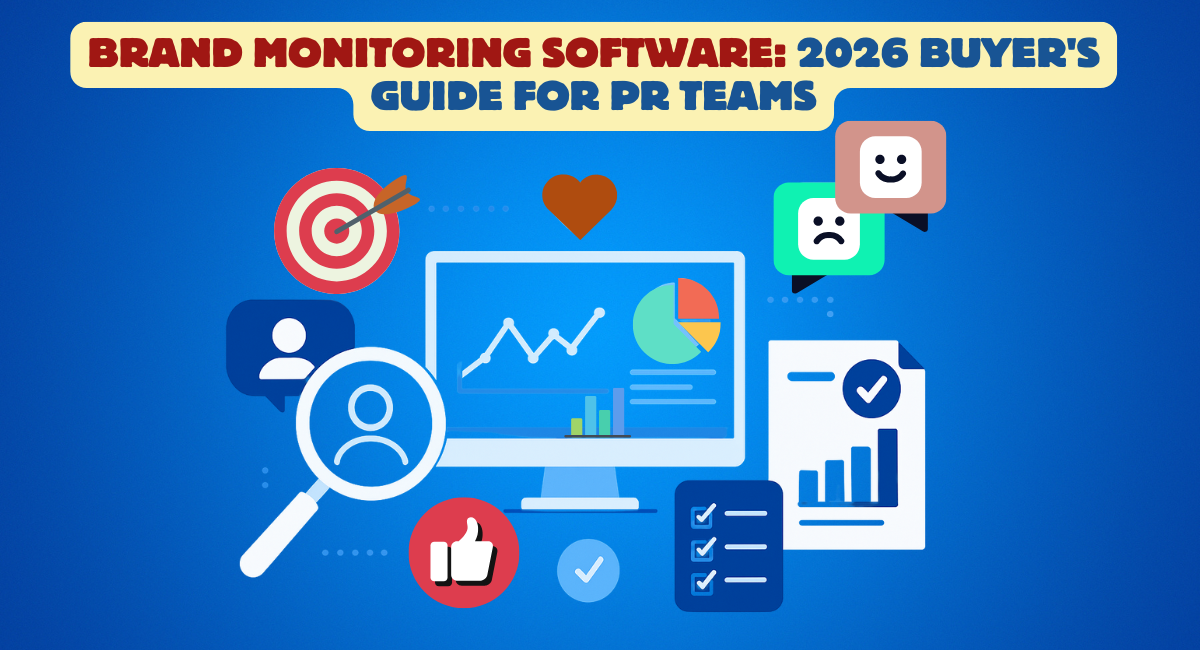
PR teams evaluate an average of 6.2 brand monitoring tools before making a purchase decision, according to our recent survey of 200 communications professionals. With over 200 tools competing for attention in today’s crowded market, the selection process has become more complex than ever. The stakes are higher too—the right brand monitoring platform can mean the difference between catching a crisis in its early stages and scrambling to respond after damage has already spread across social networks and traditional media.
This comprehensive buyer’s guide provides a practical framework for evaluating brand monitoring tools based on PR-specific needs and workflows. We’ve interviewed 50 PR directors from Fortune 500 companies to agencies managing emerging brands, distilling their insights into actionable guidance. Whether you’re replacing an existing platform or implementing your first brand monitoring solution, this guide will help you navigate the selection process with confidence and clarity.
The landscape of brand monitoring tools has evolved dramatically in the past two years, with AI-powered analytics, predictive capabilities, and real-time sentiment analysis becoming standard expectations rather than premium features. Understanding how these advances translate into practical benefits for your PR team’s daily operations is crucial for making an informed decision that will serve your organization’s needs today and tomorrow.
Essential Features PR Teams Need
Modern PR teams require brand monitoring tools that go far beyond basic keyword tracking. The most effective platforms combine comprehensive coverage with intelligent analysis to deliver actionable insights that directly support strategic communications goals. Based on our research, here are the critical capabilities your brand monitoring solution must provide.
Real-time Alerting with Intelligent Prioritization
Speed matters in crisis communication. Our data shows that the average PR team takes 4.2 hours to respond to potential issues without automated alerts, compared to just 23 minutes with properly configured real-time notifications. However, not all alerts are created equal. The best brand monitoring tools use machine learning to distinguish between routine mentions and potential issues that require immediate attention, reducing alert fatigue while ensuring critical situations don’t slip through the cracks.
Look for platforms that allow granular alert customization based on sentiment shifts, volume spikes, influential source mentions, and custom Boolean logic. The ability to set different alert thresholds for different stakeholders—executives might only want high-priority alerts while analysts need comprehensive coverage—is essential for organizational efficiency.
Sentiment Analysis with Minimum 85% Accuracy
Sentiment analysis accuracy has become a make-or-break feature for brand monitoring tools. Industry research indicates that 85% accuracy is the minimum threshold for practical use in professional PR environments. Below this level, false positives and misclassified negative sentiment create more work than value, forcing teams to manually verify every alert and undermining confidence in the platform’s insights.
Advanced platforms now offer context-aware sentiment analysis that considers industry-specific language, sarcasm detection, and cultural nuances. This is particularly important for global brands where sentiment expression varies significantly across different markets and languages.
Multi-language Capabilities for Global Coverage
A striking 62% of brand crises originate in non-English content, making multi-language monitoring essential even for primarily domestic brands. Social media has made local issues global overnight, and what starts as a regional concern in one language can quickly escalate into an international reputation challenge.
Effective multi-language brand monitoring requires more than basic translation. Look for tools that understand cultural context, local media landscapes, and region-specific social platforms. The platform should provide native language sentiment analysis rather than relying on translation engines that can miss important nuances in tone and meaning.
Historical Data Access and Trend Analysis
Strategic communications requires understanding patterns over time. A minimum of two years of historical data access allows PR teams to identify seasonal trends, track campaign performance, and establish baseline metrics for comparison. This historical perspective is invaluable for crisis planning, competitive analysis, and demonstrating the impact of PR initiatives to executive stakeholders.
The most valuable platforms don’t just store historical data—they make it actionable through trend analysis, anomaly detection, and pattern recognition that helps predict potential issues before they escalate.
Executive-Ready Reporting and Visualization
Custom reporting capabilities must bridge the gap between raw data and executive decision-making. The best brand monitoring tools provide automated report generation with narrative summaries that explain what the data means for business objectives. Visualization should be intuitive enough for C-suite consumption while detailed enough for analyst-level investigation.
Look for platforms that offer customizable dashboards, scheduled report delivery, and the ability to create presentation-ready outputs without requiring design skills or additional software.
API Integration and Workflow Connectivity
Brand monitoring tools must integrate seamlessly with existing PR workflows. API connectivity to Slack, Microsoft Teams, project management platforms, and CRM systems ensures that insights reach the right people at the right time without requiring constant platform switching.
The most sophisticated integrations go beyond simple notifications, allowing for two-way data flow that can trigger automated responses, update crisis management protocols, or feed into broader business intelligence systems.
Essential Features Checklist
| Feature Category | Must-Have Requirements | Nice-to-Have Additions |
|---|---|---|
| Real-time Monitoring | Sub-5 minute alert delivery, custom thresholds | Predictive trend detection, anomaly alerts |
| Sentiment Analysis | 85%+ accuracy, context awareness | Emotion detection, intent classification |
| Coverage | Social, news, blogs, forums, review sites | Broadcast monitoring, podcast transcription |
| Reporting | Automated scheduling, executive summaries | Competitive benchmarking, ROI calculation |
| Integration | Slack/Teams, email, basic API | CRM sync, workflow automation, webhooks |
Types of Brand Monitoring Tools
Understanding the different categories of brand monitoring tools helps narrow your search based on organizational needs and existing technology infrastructure. Each type offers distinct advantages and limitations that align with different PR team structures and strategic priorities.
Enterprise Platforms with Human Analyst Support
Enterprise-grade brand monitoring tools combine advanced technology with human expertise to deliver the highest level of accuracy and strategic insight. These platforms typically include dedicated analyst support, custom research capabilities, and industry-specific expertise that goes beyond automated monitoring.
These solutions excel for organizations facing complex reputation challenges, regulatory scrutiny, or operating in highly sensitive industries where accuracy and context are paramount. The human element provides quality assurance for critical decisions and offers strategic guidance that purely automated tools cannot match. Strategic media analysis services represent this category’s approach to combining technological capability with human insight.
Best for: Fortune 500 companies, heavily regulated industries, brands facing ongoing reputation challenges, organizations requiring customized research and analysis.
Social-Only Monitoring Specialists
Social media-focused brand monitoring tools provide deep insights into platform-specific conversations, influencer identification, and social sentiment trends. While limited in scope compared to comprehensive platforms, these tools often offer superior social analytics, engagement tracking, and community management features.
These platforms excel at identifying emerging social trends, tracking hashtag performance, and providing detailed demographic analysis of social audiences. They’re particularly valuable for brands with strong social media presence or those targeting younger demographics where social conversation drives broader media coverage.
Best for: Consumer brands, social-first organizations, companies with dedicated social media teams, brands targeting Gen Z and millennial audiences.
News Monitoring Specialists
Traditional media monitoring platforms focus on news coverage, press releases, and editorial content across print, broadcast, and digital news sources. These tools typically offer superior news source coverage, journalist identification, and earned media valuation capabilities.
News monitoring specialists provide comprehensive coverage of traditional media landscapes and often include features like circulation data, audience reach metrics, and competitive share of voice analysis. They’re essential for organizations where traditional media coverage significantly impacts business outcomes.
Best for: B2B organizations, government agencies, traditional industries, brands where news coverage drives business impact, crisis communication planning.
All-in-One PR Management Suites
Integrated PR platforms combine brand monitoring with media relations, content distribution, and campaign management capabilities. While convenient for workflow consolidation, these tools often require trade-offs in monitoring depth or feature sophistication compared to specialized platforms.
The primary advantage lies in workflow integration and data consistency across PR functions. Teams can move seamlessly from monitoring to media outreach to campaign analysis within a single platform, reducing training requirements and simplifying vendor management.
Best for: Small to medium-sized PR teams, agencies managing multiple clients, organizations prioritizing workflow efficiency over specialized capabilities.
AI-Powered Innovation Leaders
Next-generation brand monitoring tools leverage advanced artificial intelligence for predictive analytics, automated insights generation, and proactive issue identification. These platforms represent the cutting edge of monitoring technology but may require higher technical sophistication from users.
AI-powered tools excel at pattern recognition, trend prediction, and automated insight generation that can identify opportunities and risks before they become obvious to competitors. They’re particularly valuable for fast-moving industries where early identification of trends provides competitive advantage.
Best for: Technology companies, innovative brands, organizations with data-savvy PR teams, companies operating in rapidly changing markets.
Evaluation Framework for Brand Monitoring Tools
Selecting the right brand monitoring platform requires a systematic evaluation approach that weighs different capabilities against your organization’s specific needs and priorities. This framework provides a scoring methodology to objectively compare platforms and justify decisions to stakeholders.
Coverage Breadth (40% Weight)
Coverage represents the foundation of effective brand monitoring. Evaluate platforms based on source diversity, global reach, and real-time accessibility. Consider not just the quantity of sources but their relevance to your industry and target audiences. A platform monitoring millions of sources means little if it misses the niche publications and forums where your stakeholders actually engage.
Key evaluation criteria include social platform coverage, news source comprehensiveness, international source inclusion, and access to specialized sources like industry publications, regulatory filings, and professional networks. Document which sources are most critical for your monitoring needs and weight platform capabilities accordingly.
Analysis Depth (30% Weight)
Analysis capabilities determine how effectively the platform transforms raw mentions into actionable insights. Sentiment accuracy, theme extraction, influencer identification, and competitive intelligence features fall into this category. The goal is identifying platforms that reduce manual analysis time while increasing insight quality.
Evaluate sentiment analysis accuracy through test cases relevant to your industry, assess the platform’s ability to identify emerging themes and topics, and examine how well it distinguishes between different types of mentions and their relative importance to your brand.
Usability and Workflow Integration (20% Weight)
Even the most sophisticated platform fails if team members can’t efficiently use it in their daily workflows. Consider learning curve, interface design, mobile accessibility, and integration capabilities with existing tools and processes.
Training time is a critical factor—platforms requiring extensive training create adoption barriers and ongoing support overhead. The best tools feel intuitive immediately while offering advanced capabilities for power users. Executive news briefing solutions exemplify how sophisticated monitoring can be packaged for immediate usability.
Support Quality and Strategic Guidance (10% Weight)
Technical support and strategic guidance become crucial during crisis situations and platform implementation. Evaluate response times, expertise level of support staff, availability of strategic consultation, and quality of training resources.
Consider whether the vendor provides industry-specific expertise, crisis support availability, and ongoing strategic guidance beyond basic technical support. The best vendors act as strategic partners rather than simply software providers.
Evaluation Scorecard Template
| Evaluation Criteria | Weight | Platform A Score (1-10) | Platform B Score (1-10) | Platform C Score (1-10) |
|---|---|---|---|---|
| Source Coverage Breadth | 40% | ____ | ____ | ____ |
| Sentiment Analysis Accuracy | 15% | ____ | ____ | ____ |
| Real-time Alerting | 15% | ____ | ____ | ____ |
| Interface Usability | 10% | ____ | ____ | ____ |
| Reporting Capabilities | 10% | ____ | ____ | ____ |
| Integration Options | 10% | ____ | ____ | ____ |
| Total Weighted Score | 100% | ____ | ____ | ____ |
Implementation Best Practices
Successful brand monitoring tool implementation requires careful planning and change management to ensure team adoption and maximum value realization. Most implementations follow a predictable timeline, but success depends heavily on preparation and stakeholder engagement from the beginning.
Timeline and Deployment Expectations
Plan for 2-4 weeks for full deployment of most brand monitoring tools, with enterprise platforms potentially requiring longer setup periods. The first week typically focuses on technical configuration, keyword setup, and basic training. Week two involves workflow integration testing and alert fine-tuning. Weeks three and four concentrate on advanced feature training and optimization based on initial usage patterns.
Successful implementations begin before the platform goes live. Pre-implementation planning should include stakeholder interviews, current workflow documentation, and clear success metrics definition. 24/7 situation management capabilities require particular attention to alert routing and escalation procedures during the setup phase.
Change Management for Team Adoption
Team adoption challenges often center on workflow disruption and learning curve concerns. Address these proactively by involving team members in platform selection, providing role-specific training, and demonstrating clear benefits for individual productivity. Champions within each team segment help drive adoption and provide peer support during the transition period.
Create feedback loops during the implementation process to address concerns quickly and adjust configurations based on real usage patterns. The most successful implementations treat the first month as a learning period with ongoing optimization rather than expecting immediate perfect utilization.
Integration with Crisis Management Protocols
Brand monitoring tools must integrate seamlessly with existing crisis communication protocols. This means configuring alerts to trigger appropriate escalation procedures, ensuring key stakeholders receive notifications through their preferred channels, and establishing clear decision-making processes for different types of issues.
Document how monitoring insights feed into crisis response procedures and ensure all team members understand their roles when alerts indicate potential issues. Regular training exercises help maintain readiness and identify optimization opportunities.
ROI Measurement and Success Metrics
Establish clear success metrics before implementation to demonstrate value and guide ongoing optimization. Common metrics include response time reduction, crisis prevention instances, share of voice improvements, and team efficiency gains. Quantitative measures should be supplemented with qualitative feedback about decision-making quality and strategic insight value.
Track both immediate operational benefits and longer-term strategic value. While faster response times are easily measured, the brand protection value of early issue identification may take months to demonstrate but represents the platform’s most significant contribution to organizational success.
Strategic Tool Selection for PR Success
Selecting the right brand monitoring tool requires matching platform capabilities to your team’s maturity level and organizational priorities. A sophisticated platform with advanced analytics capabilities may overwhelm a small team, while a basic tool might frustrate experienced analysts accustomed to deeper insights.
Start with pilot programs when possible, testing platforms with real scenarios and stakeholder feedback before committing to annual contracts. This approach reveals workflow compatibility issues and feature gaps that aren’t apparent in demonstrations. Consider seasonal usage patterns and crisis preparedness requirements when evaluating during pilot periods.
The most successful brand monitoring implementations view the platform as part of a broader strategic communications infrastructure rather than a standalone tool. Integration with comprehensive media monitoring capabilities and alignment with organizational crisis communication protocols ensure maximum value realization and long-term success.
Remember that the best brand monitoring tool is the one your team will actually use consistently and effectively. Technical capabilities matter, but usability, support quality, and cultural fit with your organization often determine real-world success more than feature checklists. Take time to evaluate platforms thoroughly, involve your entire team in the selection process, and prioritize solutions that enhance rather than complicate your existing workflows.

Ted Skinner
Ted Skinner is the VP of Marketing at Fullintel with extensive experience in AI implementation for public relations and media monitoring. A recognized expert in crisis communication strategy and competitive intelligence, Ted specializes in developing practical applications for AI in PR workflows. His thought leadership focuses on helping PR professionals leverage technology to enhance strategic communications while maintaining the human insight that drives successful media relations.
Read more of Ted’s insights on AI-powered PR strategies and follow his latest thinking on modern measurement approaches.

Ted Skinner is the VP of Marketing at Fullintel with extensive experience in AI implementation for public relations and media monitoring. A recognized expert in crisis communication strategy and competitive intelligence, Ted specializes in developing practical applications for AI in PR workflows. His thought leadership focuses on helping PR professionals leverage technology to enhance strategic communications while maintaining the human insight that drives successful media relations.
Read more of Ted’s insights on AI-powered PR strategies and follow his latest thinking on modern measurement approaches.