
What Is Crisis Readiness? Why Most Brands Fail Before a Crisis Starts
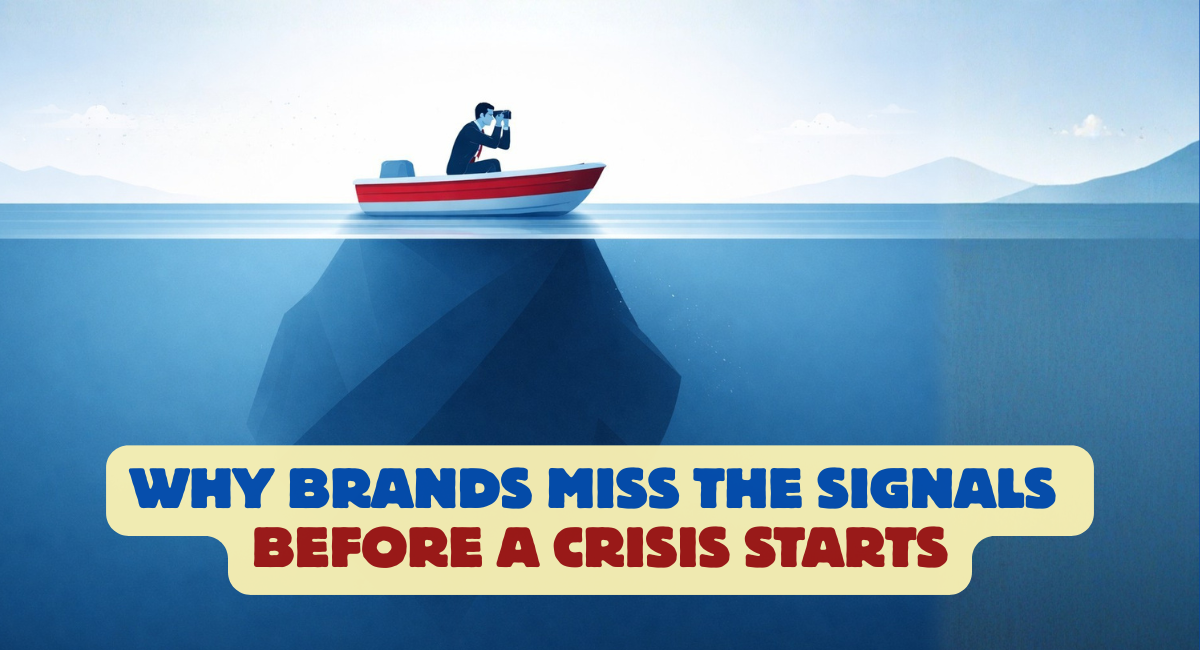
Most organizations assume a crisis begins when headlines appear.
In reality, that moment is often the final stage of a much longer process.
Long before a story becomes public, signals usually appear in niche media coverage, regulatory discussions, analyst commentary, or online communities. These signals are easy to miss when organizations rely on reactive monitoring or occasional media checks.
By the time an issue reaches mainstream attention, journalists, analysts, and stakeholders may already be shaping the narrative.
Crisis readiness exists to close this gap.
Organizations that maintain crisis readiness can detect emerging risks early, coordinate decisions across leadership teams, and respond clearly when pressure increases.
Those who do not often discover the crisis only after the story has already taken hold.
TL;DR: Crisis Readiness at a Glance
Crisis readiness is an organization’s ability to detect reputational risks early and respond effectively when issues escalate.
Organizations that maintain crisis readiness typically demonstrate:
- Continuous monitoring of media and stakeholder conversations
- Clear internal escalation paths for emerging risks
- Shared situational awareness across leadership teams
- The ability to interpret evolving narratives in real time
Without these capabilities, organizations often respond to crises only after public narratives have already formed.
What Is Crisis Readiness?
Crisis readiness refers to an organization’s ongoing ability to recognize, interpret, and respond to emerging threats before they escalate into reputational crises.
The concept extends beyond traditional crisis management plans. Plans describe how teams should respond, while readiness reflects whether organizations can actually execute those decisions under pressure.
Research published in the Journal of Contingencies and Crisis Management describes crisis readiness as a multidimensional capability shaped by leadership mindset, internal coordination, and continuous risk detection.
In practice, crisis readiness requires three core capabilities:
- Detecting emerging issues early
- Maintaining clear decision authority during crises
- Sustaining shared situational awareness as events evolve
Preparedness produces plans and procedures. Readiness determines whether those tools function when conditions become unpredictable.
Crisis Readiness in Today’s Media Environment
The modern media landscape increases the importance of crisis readiness. News cycles now operate continuously across digital platforms, and stories move quickly between online publications, broadcast outlets, and social media.
Information ecosystems have also become fragmented. Stakeholder conversations occur across independent publishers, podcasts, newsletters, and private communities. Global amplification creates additional complexity because an issue that begins in one market can influence perceptions worldwide.
These conditions reduce the time organizations have to evaluate emerging risks. Communication teams must maintain consistent monitoring across multiple channels and geographic regions. Organizations that rely on periodic media checks often miss early signals entirely.
Why Brands Overestimate Their Readiness
Many organizations believe they are prepared for crises because they have documented crisis management plans.
In practice, this confidence often proves misplaced.
Plans provide structure, but they do not guarantee operational readiness. Real crises introduce uncertainty, incomplete information, and competing priorities across departments.
Playbooks also assume that crises follow predictable paths. Modern crises rarely behave this way.
Digital platforms, fragmented media channels, and rapid information amplification allow narratives to evolve quickly and unpredictably.
Research published in the Journal of Public Relations Research also highlights the role of emotion in crisis escalation. High-intensity crises can provoke strong reactions such as moral outrage when stakeholders perceive injustice or intentional wrongdoing.
These emotional responses can drive sustained criticism, boycotts, and long-term reputational damage.
Organizations that rely only on procedural plans often struggle when public reactions escalate quickly.
The Cost of Being Unprepared
When crisis readiness is weak, several problems appear immediately.
Delayed Awareness
Organizations often recognize emerging issues only after journalists begin asking questions or the topic trends online. At that point, external voices may already be shaping the narrative.
Internal Confusion
Different departments may receive information at different times. Communications teams, legal advisors, and leadership may reach conflicting conclusions about how the organization should respond. This fragmentation frequently leads to inconsistent messaging.
Narrative Gaps
When organizations cannot explain events quickly, speculation fills the space. Analysts, commentators, and online communities interpret the situation without verified information. Once these narratives form, credibility becomes harder to restore.
Early Warning Signals of a Crisis
Most reputational crises develop gradually before they become visible public events.
Early signals often appear in places that receive limited attention, including niche media outlets, advocacy communities, regulatory discussions, and industry commentary.
Common warning signals include:
- Investigative reporting in specialized publications
- Criticism from advocacy groups or policy organizations
- Unusual spikes in social media discussion
- Questions raised by industry analysts or regulators
Organizations that monitor these signals gain valuable time to evaluate potential risks.
Early visibility allows leadership teams to prepare messaging, align internal stakeholders, and assess the issue before the narrative expands.
The 4 Core Components of Crisis Readiness
Crisis readiness depends on several organizational capabilities that enable teams to operate effectively under increased pressure.
1. Early Risk Visibility
Most crises produce warning signals before they reach major headlines. Advocacy groups may raise concerns, analysts might question a business decision, and local outlets may publish investigative stories that receive little attention at first.
Monitoring emerging coverage patterns helps organizations recognize these signals early. Strong media monitoring allows teams to detect unusual spikes in attention, shifts in tone, or growing discussions around sensitive topics. Early visibility gives leadership time to evaluate risks, prepare messaging, and align internal teams before the issue spreads.
2. Decision Readiness
Detecting a risk does not guarantee an effective response. Organizations must also have clear decision-making structures. Communications leaders need to know when to escalate issues, and executives must understand their role in approving statements or strategic responses.
Legal, risk management, and communications teams should align before crises occur. Coordination during a crisis becomes much easier when relationships and expectations already exist. Decision readiness ensures that organizations move quickly without sacrificing clarity or accuracy.
3. Narrative Awareness
Crises are shaped by interpretation as much as facts. Stakeholders evaluate events through personal beliefs, past experiences, and media framing. A single issue can produce very different narratives depending on how it is discussed publicly.
Understanding these narratives often requires structured media analysis that identifies emerging themes, sentiment shifts, and stakeholder positioning. Narrative awareness supports more informed communication decisions throughout the crisis lifecycle.
4. Monitoring Under Pressure
Monitoring systems often face their greatest challenge during breaking news. Information volumes increase rapidly across digital outlets, broadcast media, and social platforms, and teams must distinguish between meaningful developments and background noise.
Public Relations Review explains that crises should be understood as dynamic events rather than static incidents. The research shows that stakeholder perceptions of responsibility often shift as new information emerges, requiring organizations to continually reassess their communication strategies. Maintaining effective crisis monitoring during these moments ensures teams remain aware of how narratives evolve in real time.
The Crisis Readiness Framework
Crisis readiness can be understood through four interconnected capabilities.
- Signal Detection: Organizations must continuously monitor media coverage, stakeholder conversations, and regulatory developments to identify emerging risks.
- Internal Alignment: Leadership teams, communications professionals, legal advisors, and risk managers must maintain clear escalation structures and defined decision authority.
- Narrative Awareness: Understanding how journalists, analysts, and stakeholders frame events helps organizations anticipate reputational risks.
- Response Execution: When crises become public, organizations must communicate clearly and consistently while adapting responses as new information emerges.
When these capabilities operate together, organizations are better positioned to respond effectively under pressure.
Crisis Readiness Can Still Break Down in Real Time
Even organizations with strong crisis plans experience breakdowns during active crises. Information overload is a major factor because communications teams must interpret media coverage, internal reports, and stakeholder reactions simultaneously.
Conflicting priorities create additional friction. Leadership often prioritizes speed to protect reputation while legal teams emphasize accuracy and risk mitigation. Without clear escalation structures, these priorities can slow decision-making. Fragmented intelligence can also undermine responses when different departments monitor different sources and receive updates at different times. When situational awareness is incomplete, organizations struggle to align messaging or strategy.
Crises also evolve continuously. New facts emerge, media framing changes, and stakeholder expectations shift. Organizations must adjust responses as conditions develop, and teams that treat crises as fixed events often miss these turning points.
Crisis Monitoring vs. Crisis Management
Crisis monitoring and crisis management address different stages of reputational risk.
- Crisis monitoring focuses on identifying early warning signals before an issue becomes widely visible. This includes tracking media coverage, observing shifts in stakeholder sentiment, and identifying unusual increases in attention around sensitive topics.
- Crisis management begins once the issue becomes public and requires coordinated communication, leadership decisions, and stakeholder engagement.
Organizations that rely only on crisis management often respond after the narrative has already formed.
Those who invest in crisis monitoring gain valuable time to evaluate risks, prepare leadership teams, and develop informed communication strategies before reputational damage accelerates.
Crisis Readiness Across the Organization
Crisis readiness cannot be the responsibility of a single department. Communications teams play a central role in monitoring media coverage and advising leadership, but effective responses depend on coordination across leadership, legal, risk management, human resources, and operations.
Executives must remain actively involved during high-risk situations, as leadership credibility shapes how journalists and stakeholders interpret organizational responses. Regular executive visibility into media developments often comes through structured executive news briefings that summarize emerging issues and reputational risks. Boards are also placing greater emphasis on reputational risk oversight, and directors increasingly expect organizations to demonstrate structured approaches to crisis monitoring and communication.
How Crisis Readiness Protects Reputation
Crisis readiness provides value throughout the entire lifecycle of an issue.
- Before a crisis emerges, monitoring and narrative awareness allow organizations to detect early signals and assess potential risks.
- During a crisis, situational awareness supports confident decision-making because leaders receive reliable information, communications teams understand evolving narratives, and responses remain consistent across channels.
- After a crisis, monitoring remains essential because narratives often continue long after the original incident fades from headlines. Organizations must understand how the story evolves and when reputational recovery begins to take hold. Consistent monitoring allows communications teams to measure progress and identify lingering concerns.
Crisis Readiness Is a Discipline
Crisis readiness develops through continuous practice, coordination, and monitoring. Plans and procedures provide useful guidance, but readiness depends on how well organizations interpret risks and respond under pressure.
Organizations that treat readiness as an ongoing discipline maintain stronger situational awareness and clearer decision-making structures. Crises will always occur. The difference between reputational resilience and reputational damage often comes down to preparation.
Brands rarely fail because of a crisis. They fail because they were not ready when the warning signs first appeared. At Fullintel, we help you see the flashing lights through the fog. Reach out to learn more.

Ted Skinner is the VP of Marketing at Fullintel with extensive experience in AI implementation for public relations and media monitoring. A recognized expert in crisis communication strategy and competitive intelligence, Ted specializes in developing practical applications for AI in PR workflows. His thought leadership focuses on helping PR professionals leverage technology to enhance strategic communications while maintaining the human insight that drives successful media relations.
Read more of Ted’s insights on AI-powered PR strategies and follow his latest thinking on modern measurement approaches.