Top Pharma News in December 2025

Healthcare media coverage in October and November centers on regulatory tension, financial strain and shifting policy priorities across the U.S. News cycles focus on leadership disruption at the FDA, federal efforts to revise medical debt reporting rules and rising ACA premiums that place added pressure on households. These themes reflect ongoing concerns about affordability, oversight and access as stakeholders navigate changing political and economic conditions. The Fullintel Hub helps PR teams stay current by consolidating timely updates and insights on major healthcare developments.
December’s Top Stories:
FDA Controversy, Medical Debt Rule Changes, and Rising ACA Premiums Lead Recent Health Coverage
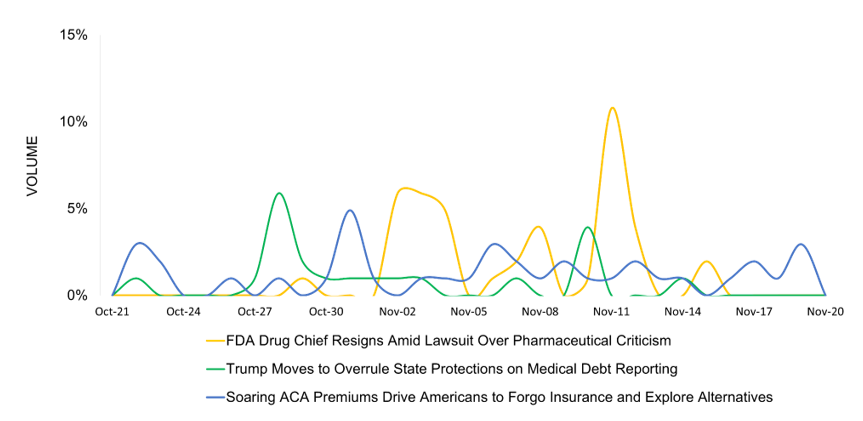
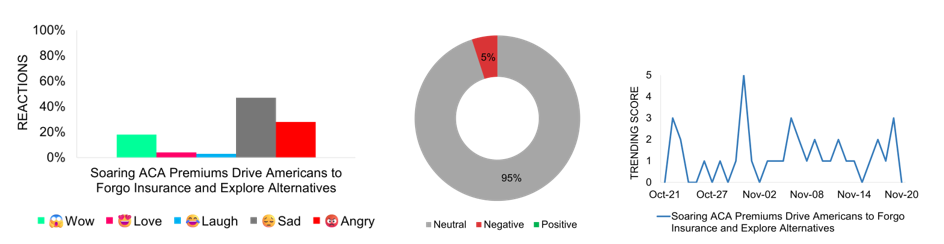
Three key developments shape healthcare media coverage in December:
- FDA Drug Chief Resigns Amid Lawsuit Over Pharmaceutical Criticism
- Trump Moves to Overrule State Protections on Medical Debt Reporting
- Soaring ACA Premiums Drive Americans to Forgo Insurance and Explore Alternatives
The FDA faces scrutiny as Dr. George Tidmarsh’s resignation raises questions about political influence in drug oversight. Federal efforts to override state protections on medical debt reporting generate debate over consumer impact and state authority. Rising ACA premiums push households to reconsider insurance coverage, underscoring wider affordability challenges. Together, these developments drive mostly neutral to negative sentiment and center public discussion on access, cost and trust in health policy decisions.

A Closer Look at December’s Top Pharma Headlines:
FDA Drug Chief Resigns Amid Lawsuit Over Pharmaceutical Criticism
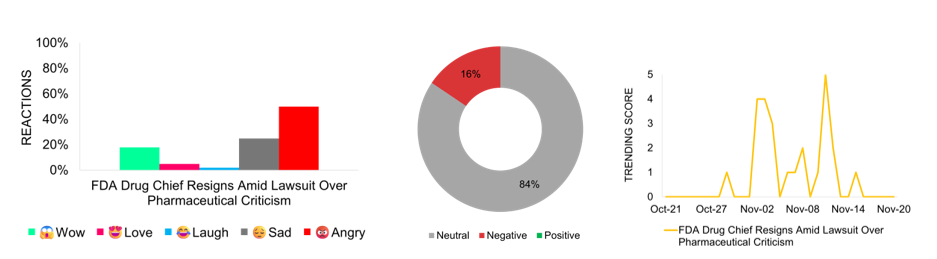
Dr. George Tidmarsh resigns as head of the FDA’s drug division amid an investigation and a lawsuit tied to his public criticism of a drug linked to a former business associate. He claims that the new rapid drug-approval program politicizes science and lacks a clear legal basis. Aurinia Pharmaceuticals sues him, alleging threats and financial misconduct, allegations he denies. His deleted LinkedIn post criticizing the drug reportedly reduced the company’s market value by $350 million. Tidmarsh describes a toxic work environment at the FDA and raises concerns about accelerated drug approvals under the current administration. Experts view his resignation and the lawsuit as evidence of rising tension between regulatory oversight and political priorities in drug approvals. Media coverage spikes in early November with sentiment mostly neutral to negative. Online reactions show concern about politicized approvals, debate over FDA independence, and potential impacts on drug safety and company valuations.
Trump Moves to Overrule State Protections on Medical Debt Reporting
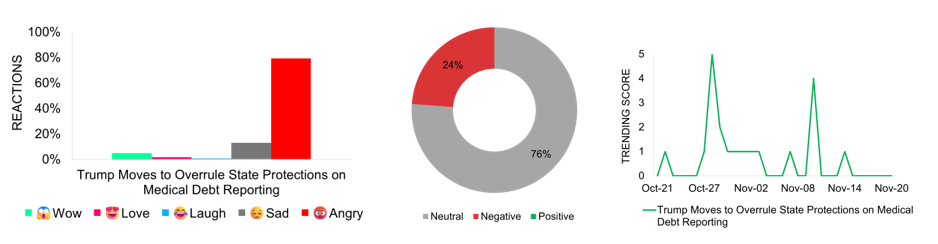
The Trump administration moves to override state laws that restrict consumers’ credit reports from medical debt, with the Consumer Financial Protection Bureau drafting a rule that restrict medical debt from appearing on consumer credit reports. The Consumer Financial Protection Bureau drafts a rule asserting federal preemption under the Fair Credit Reporting Act, reversing Biden-era protections in states such as New York and Delaware. Credit bureaus already exclude medical debts under $500, but state bans extend further. Nationwide, an estimated $220 billion in medical debt continues to affect access to mortgages, credit cards, and auto loans. Critics warn the change may increase financial burdens for consumers carrying medical debt. Media coverage builds through late October and peaks on October 28, as analysts debate implications for credit reporting and state authority. Online reactions reflect concern about financial consequences, while sentiment remains largely neutral.
Soaring ACA Premiums Drive Americans to Forgo Insurance and Explore Alternatives
As Affordable Care Act premium subsidies are set to expire at the end of the year, many Americans face steep rate hikes, prompting some to drop coverage and rely on savings instead. Experts warn this could increase medical debt and bankruptcy risk, especially for those without financial cushions. ACA enrollment reaches a record 24.3 million in 2025, but millions could lose coverage next year if subsidies lapse. The surge in premiums reflects deeper affordability challenges as pandemic-era subsidies end, insurers anticipate a less healthy risk pool and healthcare costs continue to rise across hospitals, services and drugs. Media coverage peaks in late October as ACA premium hikes and subsidy expirations draw attention, with sentiment largely neutral. Online reactions are mixed, highlighting financial strain on households and questioning the adequacy of government support.