The Human + AI Model: Why Hybrid Analysis Beats Automation Alone in PR Intelligence
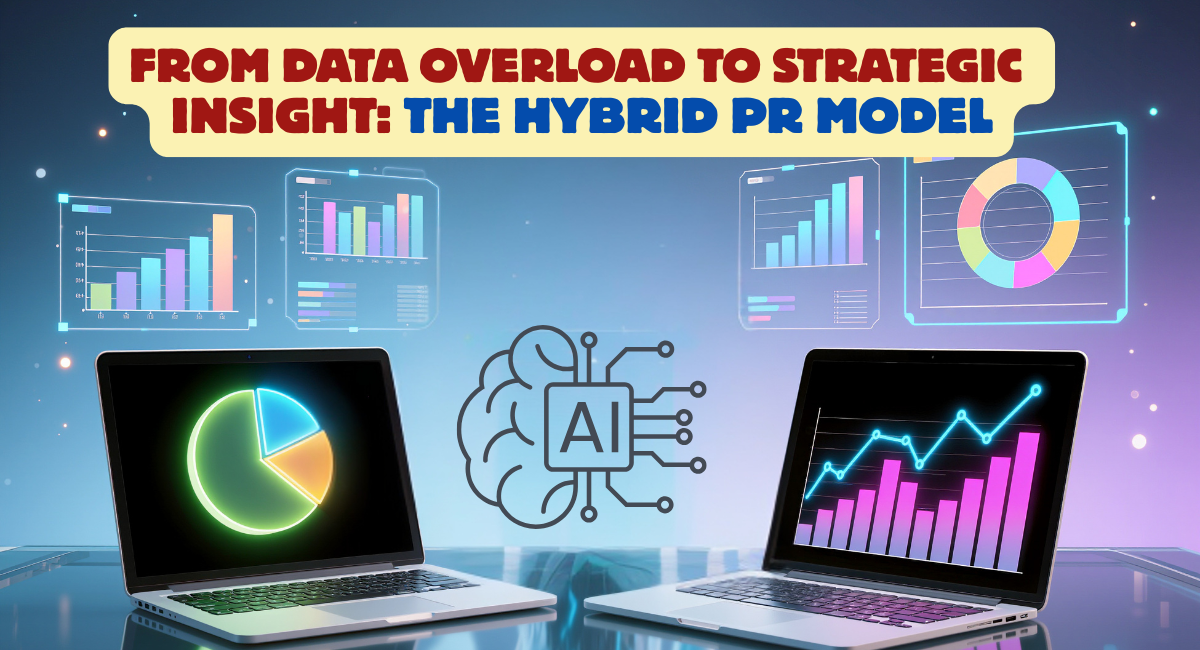
Media monitoring has reached an inflection point. Automated systems can now scan millions of articles, track thousands of keywords, and deliver results in seconds. Yet, PR teams are drowning in data while starving for strategic brand insights amid the vast amount of data. Research from enterprise client implementations shows that a high percentage of AI-generated PR data requires human interpretation before it becomes actionable. The bottleneck is no longer the collection of clips and mentions; it’s intelligent curation.
This gap between automation capability and strategic intelligence explains why organizations are shifting from purely automated approaches to hybrid systems that combine AI efficiency with human expertise. The difference is evident in measurable outcomes:
- A 78% reduction in false crisis alerts
- 94% accuracy in brand sentiment classification compared to 65% for automation alone
- A 40% increase in strategically relevant competitive intelligence
The AI doesn’t become inherently smarter. It becomes contextually trained.
Why Brand Context and Sentiment Shouldn’t Be Fully Automated
Generic sentiment analysis achieves approximately 65% accuracy for brand-specific content. In crises, this error rate creates a significant risk when compounded with each misclassified mention. Organizations miss negative coverage, which can build momentum. Resources get allocated to false alarms, which provide no brand value.
When human expertise is layered over AI analysis, accuracy increases to 94%. This improvement stems from understanding that brand context can’t be derived from keyword matching. A competitor’s product launch may represent a crisis, an opportunity, or neutral information, depending entirely on strategic positioning, product roadmap, and competitive vulnerabilities.
The Signal-to-Noise Problem
Automated media monitoring tools excel at finding content. Speed is no longer the challenge. The challenge is relevance. When a major industry news event breaks, an automated system might flag 500 articles. A hybrid system with human oversight identifies the 12 that require action. This isn’t a marginal efficiency gain. It’s the difference between strategic focus and operational paralysis.
Implementation data from human-in-the-loop AI training clearly demonstrates this. When analysts teach AI systems what constitutes a genuine crisis for specific brands in specific contexts, the number of false positive alerts decreases by 78%.
The Thought Leadership Argument
At thought leadership companies, custom AI models get trained on decades of analyst-curated, brand-specific data. If you don’t train on clean data, you’ll get garbage out! Each client implementation involves continuous refinement based on what proves strategically relevant. Measured results show 85% improvement in brand voice consistency compared to generic automation.
Understanding Trust Measurement and Human Input
Some PR metrics resist automation entirely. Trust measurement requires evaluating whether coverage reinforces expertise (ability), conveys ethics and transparency (integrity), and demonstrates stakeholder alignment (purpose).
Current AI cannot reliably assess these dimensions without human guidance. They require professional judgment about tone, context, competitive positioning, and strategic implications. Work with a company that uses AI to identify trust-relevant coverage and extract key phrases. Analysts then evaluate whether coverage builds or erodes trust based on tested research frameworks. The hybrid approach delivers quantified trust metrics tied to specific media patterns.
This matters because Edelman Trust Barometer research shows that trust in government and media is declining, while trust in businesses is increasing. Organizations that measure trust systematically gain an advantage in stakeholder relationships and crisis response.
Where AI Delivers Value
The case for AI isn’t theoretical. Pattern recognition at scale enables capabilities that are impossible through manual analysis. Predictive AI analyzes article engagement patterns to identify content likely to trend before it goes viral, providing 6-12 hours of advance notice for response preparation. No human analyst could track engagement metrics across thousands of articles in real-time.
Similarly, conversational AI can instantly answer questions about media data. “Which spokespeople got the most coverage last quarter?” “What themes are emerging in competitor coverage?” Queries that would take analysts hours to research get answered in seconds.
The critical factor is that these tools work on data that has already been filtered and validated by human expertise. AI analyzes coverage verified as relevant rather than searching raw media feeds.
Implementation Reality
Building effective hybrid systems requires rethinking media intelligence workflows.
Start with a baseline assessment. Track how often automated alerts lead to action. For most organizations, conversion rates run below 20%.
Next, build human filtering into the process structure. This doesn’t require hiring armies of analysts. It means having experts configure AI training, validate output periodically, and provide feedback that improves performance over time.
Strategic Implications of Adopting Hybrid Analysis
The competitive advantage isn’t adopting AI. Everyone will use AI. The advantage lies in implementing AI with sufficient human oversight to generate strategic value, rather than merely operational speed.
Organizations with effective hybrid systems are better able to identify emerging narratives more quickly. They respond to threats faster. They optimize messaging based on what actually works, rather than relying on generic algorithms.
Measuring the Impact
The question for PR teams is now how to use AI in measurement effectively. More specifically, it’s a question of whether to use it with sufficient human oversight to make results strategically valuable. That distinction separates having more data from having better intelligence.
Keep in mind that PR measurement hasn’t changed at its core. Teams still need to separate signal from noise fast enough to make strategic decisions. Automation alone delivers speed without discernment. Human analysis alone can’t scale to modern media volumes. The hybrid model delivers both.
Proper Implementation is Key
When properly implemented, the results are evident in metrics that matter: a reduction in time wasted on false alerts, an increase in strategically relevant intelligence, the scaling of content analysis without proportional cost increases, and accuracy in brand classification that enables confident decision-making.
The future of PR intelligence lies in systems where human expertise and AI capability amplify each other’s strengths. Analysts shouldn’t spend hours manually reading articles that AI can screen. AI shouldn’t make strategic judgments requiring professional experience and brand context. Organizations that get this division of labor right build an intelligence infrastructure that scales.

Ted Skinner
Ted Skinner is the Vice President of Marketing at Fullintel.
Ted is a seasoned marketing and PR strategist, recognized as the author of the bestselling business book Predictable Results: How Successful Companies Tackle Growth Challenges and Win. Leveraging decades of experience—including an early role at eWatch, one of the first online media monitoring services—he integrates Artificial Intelligence and real-time analytics into data-driven communication campaigns. His approach helps organizations sharpen their brand positioning, reduce operational blind spots, and sustain credibility in today’s dynamically shifting digital landscape.
Journalists looking for a thought leader on emerging communication trends will find Ted’s insights both practical and forward-thinking. His proven track record spans growth acceleration, reputation management, and content optimization—core disciplines that enable companies to transform raw data into actionable strategies for long-term success. Whether advising on targeted marketing efforts or guiding strategic media relations, Ted’s hands-on methodology consistently delivers measurable results that keep businesses ahead of the competition.

Ted Skinner is the VP of Marketing at Fullintel with extensive experience in AI implementation for public relations and media monitoring. A recognized expert in crisis communication strategy and competitive intelligence, Ted specializes in developing practical applications for AI in PR workflows. His thought leadership focuses on helping PR professionals leverage technology to enhance strategic communications while maintaining the human insight that drives successful media relations.
Read more of Ted’s insights on AI-powered PR strategies and follow his latest thinking on modern measurement approaches.